
French Press vs Espresso
Few comparisons capture this contrast better than the French press and the espresso machine.
7/27/20263 min read
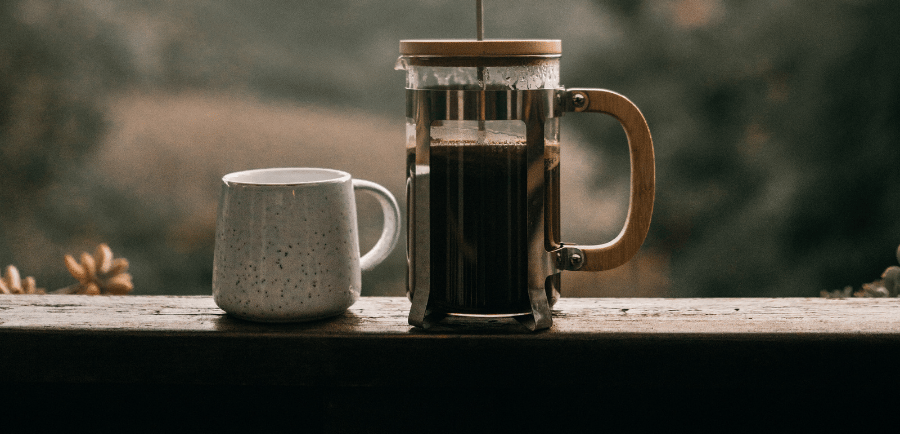
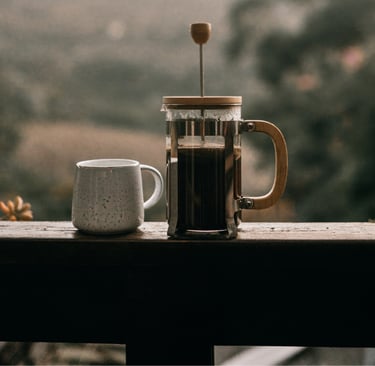
French Press vs Espresso: The Ultimate Brewing Showdown
Coffee can be simple, or it can be endlessly complex. Few comparisons capture this contrast better than the French press and the espresso machine. On one side, you have the French press: a slow, grounded, and forgiving immersion process. On the other, espresso: fast, highly pressurized, and intensely precise.
Whether you're looking to upgrade your morning routine, maximize your caffeine intake, or just understand what exactly you're ordering at the café, knowing the core differences between these two beloved methods will change the way you drink coffee.
The Core Difference: Immersion vs. Pressure
The fundamental difference between these two methods comes down to physics: how the water interacts with the coffee grounds.
French Press (Immersion): This method uses a coarse grind and lets the coffee steep directly in hot water for about 4 minutes. There is no pressure involved—just time. Because it uses a metal or nylon mesh filter instead of paper, the coffee’s natural oils and fine micro-particles remain in the final cup.
Espresso (Pressure): Espresso machines force hot water through a tightly packed puck of finely ground coffee under high pressure (typically 9 bars). The entire extraction takes just 25 to 30 seconds. This violent, rapid extraction emulsifies the coffee oils, creating a highly concentrated shot topped with a thick, golden layer called crema.
Key insight: You cannot make true espresso in a French press. While you can steep finely ground coffee to make a stronger brew, achieving the intense concentration and signature crema of an espresso strictly requires high-pressure machinery.
Taste Profile and Texture
If you lined up a mug of French press coffee next to an Americano (an espresso shot diluted with water), you would immediately notice the difference in mouthfeel.
FeatureFrench PressEspressoFlavor ProfileEarthy, robust, chocolaty, and rounded.Bold, sharp, complex, and bittersweet.Texture (Body)Heavy, slightly gritty, and oily.Syrupy, velvety, and dense.VisualsDark liquid with visible sediment at the bottom.Dark liquid crowned with golden-brown crema.Best ForSlow sipping on weekend mornings; highlighting darker roasts.Quick energy boosts; cutting through milk in lattes and cappuccinos.
The Caffeine Paradox: Which is Stronger?
It is a common misconception that espresso has more caffeine because it tastes so much stronger. The reality is a fascinating paradox of concentration versus volume.
Espresso is significantly more caffeinated by volume. A standard 1-ounce single shot of espresso contains roughly 63 to 68 milligrams of caffeine. By comparison, French press coffee only contains about 10 to 15 milligrams of caffeine per ounce.
However, nobody drinks just one ounce of French press coffee. A standard 8-ounce mug of French press coffee yields between 80 and 120 milligrams of total caffeine, easily beating a single shot of espresso. Because the coffee grounds steep for several minutes, the water has more time to extract caffeine from the beans.
Want a quick jolt of energy? Go with espresso. The high concentration allows for faster caffeine absorption.
Want maximum total caffeine for a sustained morning? Brew a large French press.
Gear, Cost, and Effort
The barrier to entry is radically different for these two brewing methods.
French Press:
This is the ultimate low-tech, budget-friendly brewer. For around $20 to $40, you can buy a high-quality glass or stainless steel press. All you need is coarsely ground coffee and a kettle to boil water. The workflow is slow but highly forgiving. You don't need exact precision; just pour, wait 4 minutes, press, and drink.
Espresso:
Espresso demands a high initial investment and a steep learning curve. To pull a proper shot, you need an espresso machine capable of generating 9 bars of pressure, a high-quality burr grinder capable of micro-adjustments for fine grinds, a tamper, and a scale. While automatic machines handle the work for you, a traditional manual setup requires "dialing in" the grind size and dose every morning to avoid a shot that tastes sour or overly bitter.
Which Should You Choose?
There is no objective winner in the French press vs espresso debate—only the method that best fits your lifestyle.
Choose the French press if you enjoy a therapeutic, hands-on morning ritual and love a heavy, bold, unfiltered cup of coffee. It is inexpensive, requires very little technical skill, and is perfect for brewing multiple cups at once when hosting guests.
Choose espresso if you value speed, intensity, and café-quality milk drinks. If your ideal morning involves a velvety flat white or a quick, concentrated shot before rushing out the door, the investment in an espresso machine will pay off daily.
